GREAT REVOLUTION IN MATHEMATICS

Srinivasa Ramanujan

When he was 15 years old, he obtained a copy of George Shoobridge Carr’s Synopsis of Elementary Results in Pure and Applied Mathematics, 2 vol. (1880–86). This collection of thousands of theorems, many presented with only the briefest of proofs and with no material newer than 1860, aroused his genius. Having verified the results in Carr's book, Ramanujan went beyond it, developing his own theorems and ideas. In 1903 he secured a scholarship to the University of Madras but lost it the following year because he neglected all other studies in pursuit of mathematics.
Ramanujan continued his work, without employment and living in the poorest circumstances. After marrying in 1909 he began a search for permanent employment that culminated in an interview with a government official, Ramachandra Rao. Impressed by Ramanujan’s mathematical prowess, Rao supported his research for a time, but Ramanujan, unwilling to exist on charity, obtained a clerical post with the Madras Port Trust.
Alongside his outstanding discoveries in continued fractions, divergent series, hypergeometric series, Reimann series and elliptic integrals, his advancements in partition of numbers are quite phenomenal. Ramanujan worked on properties of partition function and in collaboration with G. H. Hardy, developed the circular method to represent an integer in the form of its partitions. This led to many developments in analytic number theory by future mathematicians.
In 1917, Ramanujan got diagnosed with tuberculosis. He returned to India in 1919 and died in 1920, at the age of 32.
About three months before his death, Ramanujan wrote his last letter to Hardy, explaining his new discovery in mathematics; the Theta Function and its 17 identities. Later, many mathematicians worked on this function, proved the identities and found new ones too.
Even though Ramanujan had got many papers published in different journals during his life, much work remained unpublished. The notes that he left behind were studied by many mathematicians after him, who verified his discoveries, and found their potential applications.
1. Ramanujan–Nagell equation


Aryabhata

History of the Great Mathematician, Aryabhata
Aryabhata was an extraordinary teacher and scholar who had immense knowledge about mathematics and astronomy. He suggested the heliocentric theory which proved that the sun is located in the centre of the solar system and all the planets revolve around it. In fact he made this discovery way before Copernicus made this discovery in the West.
Aryabhata was born in Kerala and lived from 476 AD to 550 AD, he completed his education from the ancient university of Nalanda and later he moved to Bihar and continued his studies in the great centre of learning located in close proximity to Kusumpura in Bihar and lived in Tarragona District in Bihar in the late 5th and early 6th century.
His contribution to the astronomy
The astronomical calculations and deductions suggested by Aryabhata are extraordinary by the fact that he didn’t have any modern equipment or instrument to do it. He had a very sharp brain and his dedication and hard work led him to solve the various mysteries of the solar system. He also deduced that the earth is round in shape and rotates along its own axis, which forms the existence of day and night. Many superstitious beliefs were challenged by him and he presented scientific reasons to prove them wrong.
He also said that the moon has no light and shines because it reflects light from the sun. He also proved wrong the false belief that eclipse is caused because of the shadows formed by the shadows cast by the earth and the moon. Aryabhata used epicycles in a similar manner to the Greek Philosopher Ptolemy to illustrate the inconsistent movement of some planets. This great astronomer wrote the famous treatise Aryabhata, which was based on astronomy
in 499 AD. This treatise was acknowledged as a masterpiece. In honor of this excellent work Aryabhata was made head of the Nalanda University by the Gupta ruler Budhagupta.
Aryabhata – a treatise that solved various mysteries related to astronomy
Aryabhata is a treatise that includes various facts related to Hindu mathematics and astronomy that appeared during those times. The treatise comprises of four chapters that are concerned with sine tables and astronomical constants. It also comprises of rules to calculate the longitudes of the planets by utilizing epicycles and eccentrics and also the rules related to trigonometry and calculation of eclipses. There is a granita section in the Aryabhata, which include various innovative methods for calculating the lengths of the chords of circles by using the half chord method unlike the Greeks who used the full chord method.
Contribution in the approximation of pi
Aryabhata is among the mathematicians who brought new deductions and theories in mathematics and astronomy. His contribution to the mathematics is unmatched and cannot be ignored, as he was the one who deduced the approximate value of pi, which he found it to be 3.14. He also derived the correct formulas for calculating the areas of triangles and circles. He also played a very important role in the formation of the table of Sines.
His role in the place value system
He also played a very major role in determining the place value system and discovering the zero. He also worked on the summation series of square roots and cube roots. He is also regarded as the first to use zero in the place value system. He also calculated the sidereal rotation, which is the rotation of the earth in relation to the fixed stars. His theories and deductions formed the base of the trigonometry and algebra.
For his extraordinary works and contributions to mathematics and astronomy, India’s first satellite was named as Aryabhata. Aryabhata Research Institute of Observational Sciences near Nainital and the Aryabhata Knowledge University in Patna, in India are also named after him.
CONTRADICTIONS:-
If Aryabhata invented 0, then how did we know that Ravana had 10 heads?

Do you think the number 10 cannot be counted without the digit ‘0’…!
See some images below…


and now some images taken from an other answer given by User-13657865143700880041 below…


Now the thing begins….
Some more sources says that his 10 heads represents …
- Ravana's 10 heads symbolise the six darshan Shastras and four Vedas, making him a great scholar and the most intelligent person of his time.
- Ravana performed an intense penance - tapasya - to Brahma, lasting several years. During his penance, Ravana chopped off his head 10 times as a sacrifice to appease Brahma. Each time he sliced his head off, a new head arose, thus enabling him to continue his penance.

And one more thing…RAVAN never had 10 heads, its simply not possible
I Personally think that more than two hands, number of heads, and other extraordinary features only depicts some facts or traits about that particular character…
BHASKARA
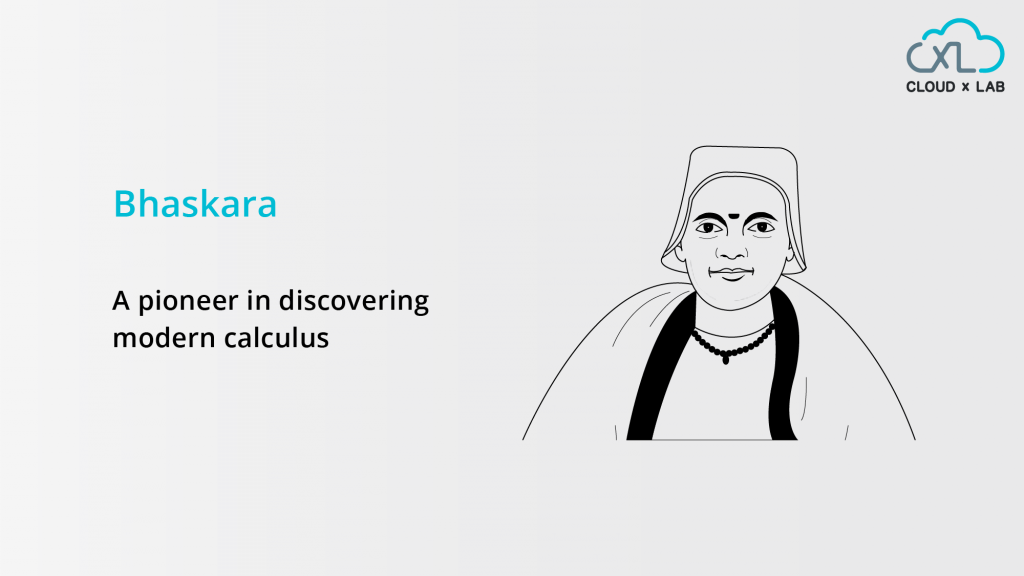
Bhaskara was an Indian mathematician and astronomer born in Bijapur, Karnataka. His work in calculus and how it is applied to astronomical problems and computations is what makes him immensely popular. Not just calculus, Bhaskara was an expert in arithmetic, algebra, the mathematics of planets and spheres.
HEMCHANDRA

He was a Jain philosopher, scholar, and an exceptional mathematician. He described the Fibonacci sequence even before Fibonacci himself. He also worked with the cadences of length n. Well-known as a prodigy by his generations, Hemchandra earned the title kalikālasarvajña, i.e. “the all-knowing of the Kali Yuga”.


